

Criminal Defense
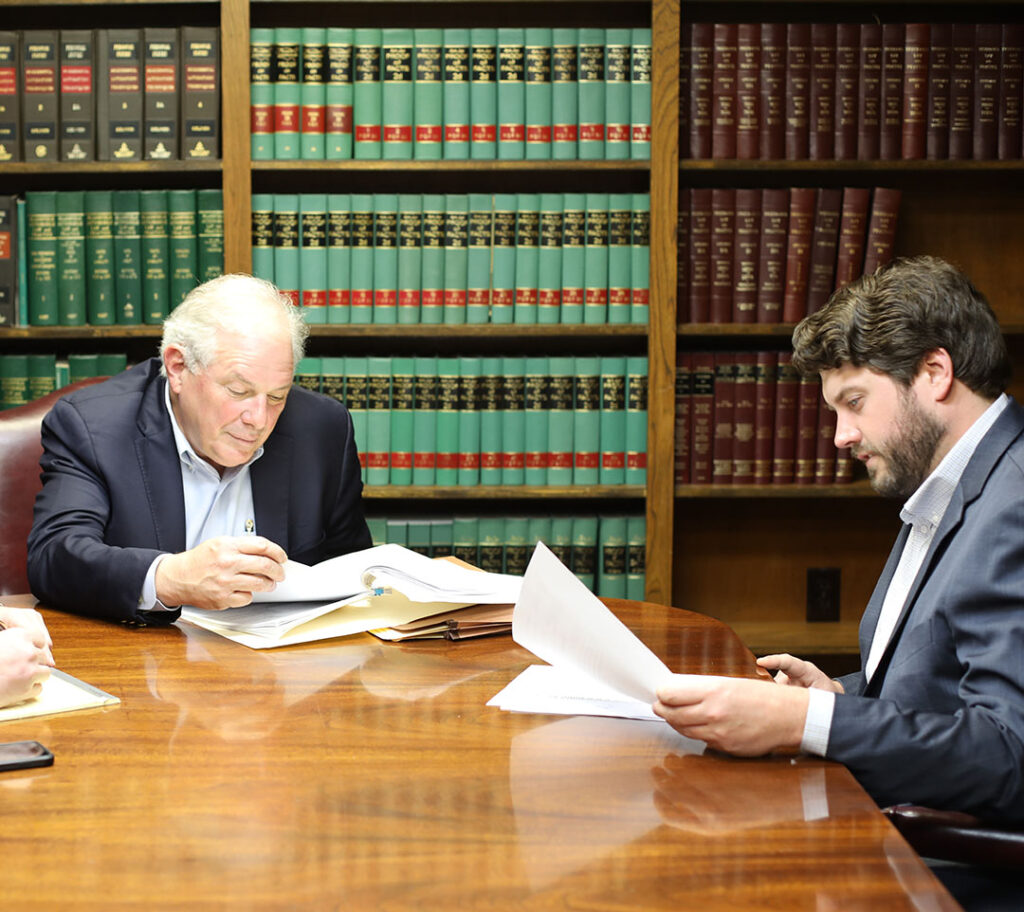
Criminal Defense Attorneys
Have you been accused of committing a crime? Time is crucial to the outcome of your case, so don’t wait to consult with a criminal defense attorney. At the Hightower Law Firm, we have experience on both sides of the aisle – prosecution and defense – that we draw upon to better serve our clients during this uncertain time in their lives.
Your rights in the face of criminal charges are valuable and under threat. If you have been suspected, implicated, or charged with a crime, contact the criminal defense attorneys at the Hightower Law Firm for an initial consultation, and we will work together to protect you and your personal rights. Federal and state laws carry harsh sentences for criminal charges, including lengthy jail time, monitored probation, home incarceration, hefty fines, mandatory adjudication programs, or a combination of the above. Outside of punitive measures, living a with criminal record can significantly decrease your quality of life. It can be difficult or impossible to find employment, housing, and education opportunities.
Frequently Asked Questions
A: Regardless of how you plan on pleading, having an attorney on your side can help protect your legal rights in court and beyond. Representing yourself in court is dangerous territory and may significantly reduce your potential for a good outcome. Sadly, the public defender’s office is understaffed and overworked, and relying on them to represent you may be detrimental to your case. Prosecutors will try to bring the harshest punitive measures under the law, but an experienced litigator can possibly help to reduce or eliminate charges even before you step into court depending on your circumstances.
A: Once the handcuffs are on there isn’t much you can do to talk yourself out of going to jail – so don’t. After your Miranda Rights are read to you, you can immediately request to speak to an attorney before any police interrogation begins. We highly recommend that you request to speak to your attorney as soon as possible to have them present with you during questioning. We do not recommend that you speak to police other than to identify yourself and to request your attorney, unless in the presence of your legal counsel. You will be handcuffed, brought to the station, booked, fingerprinted, photographed, and placed in a holding cell until you can be questioned. Depending on the circumstances and any evidence they have, there are limits to how long the police can hold you. Your attorney will help you navigate through interrogation, advising on which questions to answer and which to avoid.
A: After you’ve been arrested and formally charged, you will then be brought before the judge to set your court date, determine your bail, and decide if you are a flight risk. Bail is referred to as the money that you will have to forfeit to be released from jail pending your trial date with the understanding that you will return and be refunded. However, bail is not always granted. Some of the accused may be deemed a flight risk or dangerous to society. If you are deemed a flight risk or dangerous, your bail can be revoked, and you will remain incarcerated until you trial. Most often, bail is used to pay court costs associated with your incarceration and there isn’t much or any left to be refunded after your trial.
Bonds are payment on behalf of the defendant, usually by a bail bond company, to secure your release from jail pending trial. Usually, these companies will require hefty down payments and fees and regular monitoring of defendants to ensure they will stay out of trouble and show up to their court date. If the defendant flees or doesn’t show, a bail recovery agent or a bounty hunter may be employed to track them down.
A: Simplified, probation is given as a sentence in lieu of jail/prison time and parole is a monitored early release program. With that being said, the terms of probation and parole are similar in the fact that the offender is heavily monitored during their sentence and are required to perform regular check-ins, drug testing, rehabilitation programs, and more. Both probation and parole can be revoked if in violation of the terms of release, which can result in an offender being reincarcerated for the remainder of their sentence.
A: Misdemeanor crimes are considered less serious offenses than felony crimes, including minor drug offenses, DUI, theft and shoplifting, trespassing, prostitution, simple assault or battery, and more. Felonies are punishable to the fullest extent of the law and considered to be the most serious of crimes. These types of charges can include manslaughter, rape, murder, armed robbery or burglary, kidnapping, and arson.
Lafayette's Criminal Defense Attorneys Since 1983

Speak To One Of Our Attorneys
For your own privacy, we ask that you please do not share case details on this form. Someone will contact you shortly to discuss your case in detail.